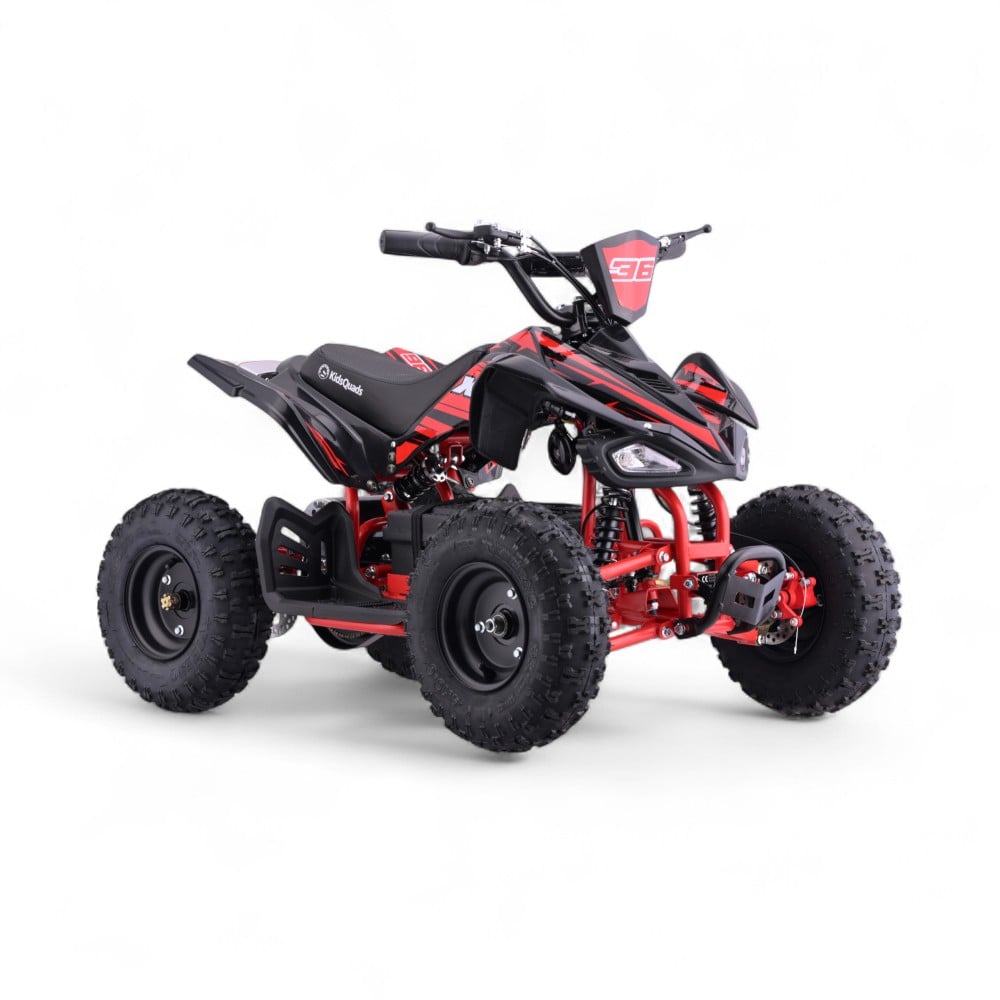
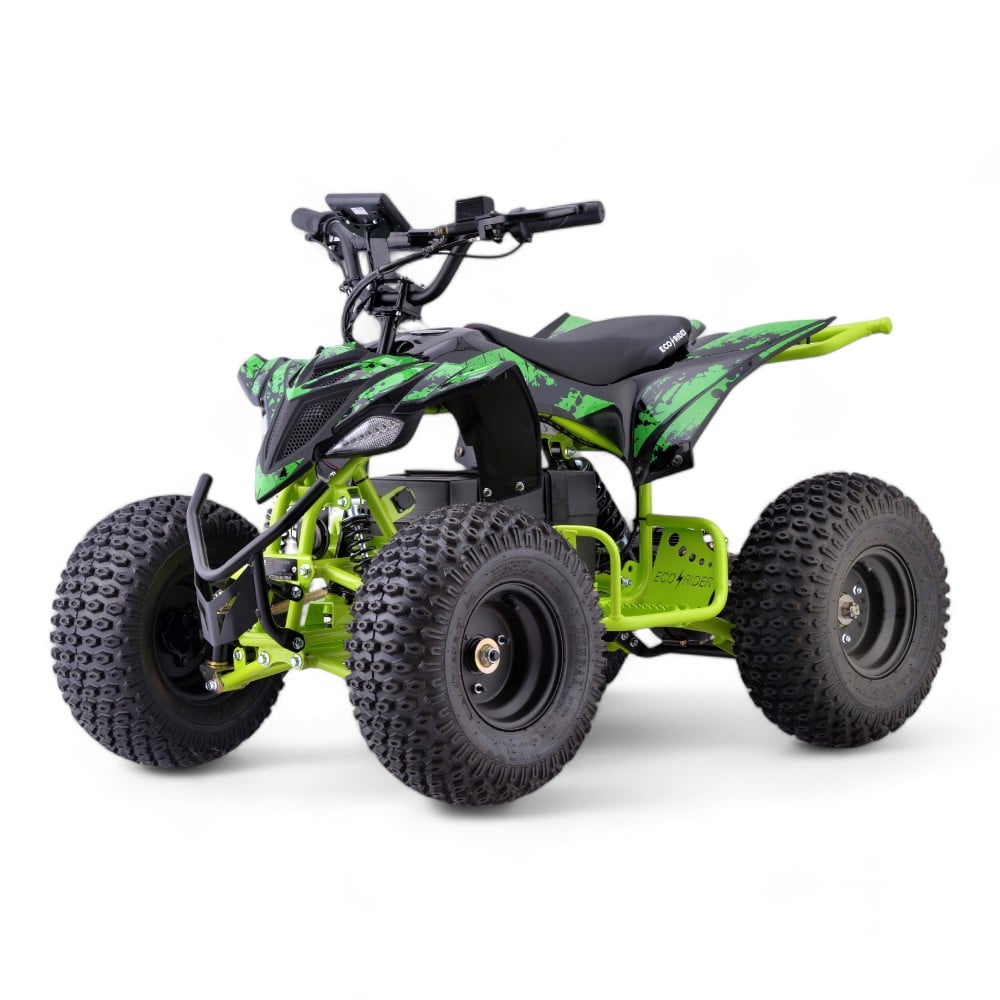
Kids ATV involves more than simply showing them the throttle and letting them go. Build confidence, teach safety and transform nervous beginners.
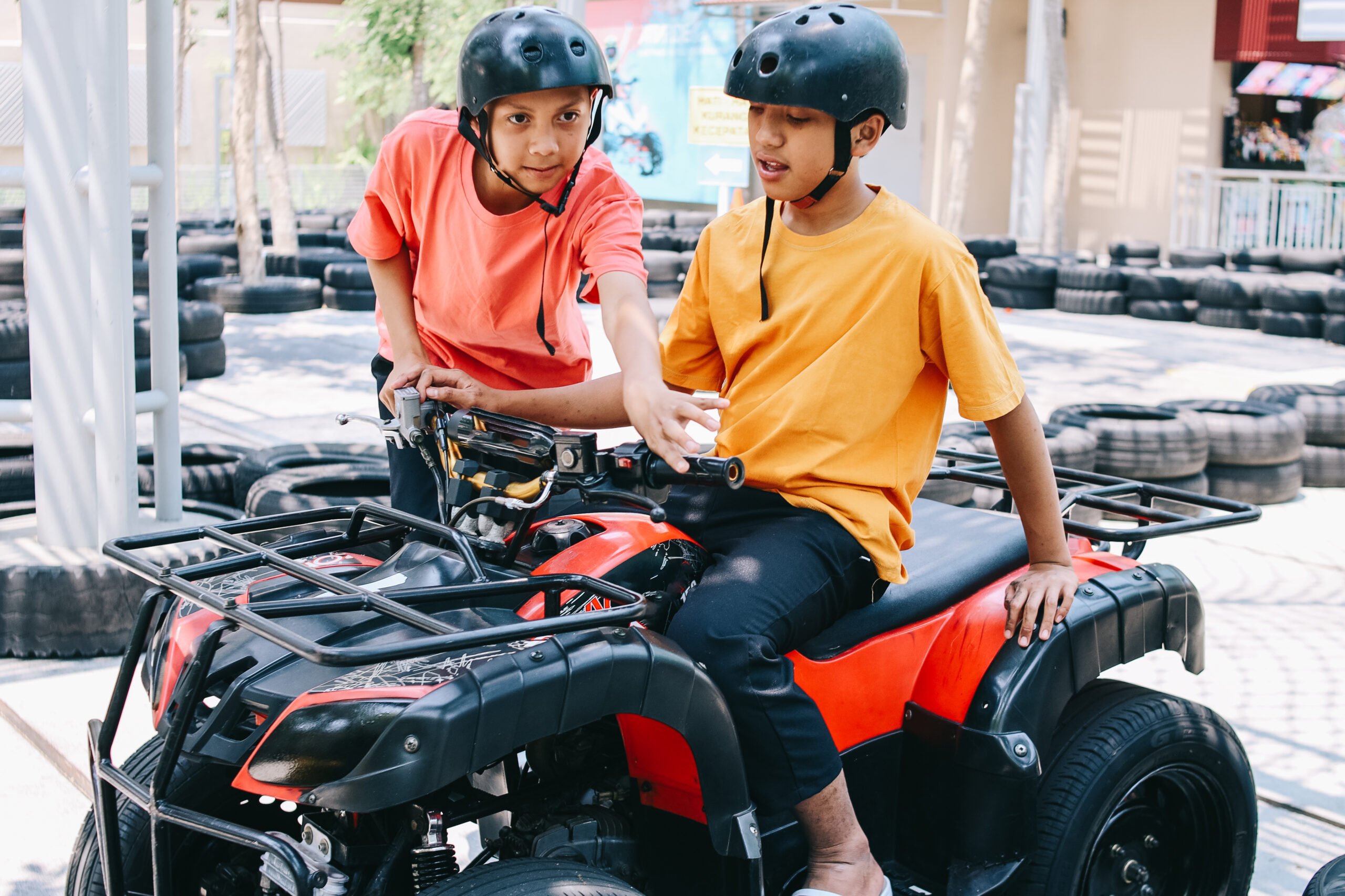
Teaching your child to ride a kids ATV involves far more than simply showing them the throttle and letting them loose. Mastering fundamental riding techniques builds confidence, prevents accidents, and transforms nervous beginners into capable riders. Understanding how to teach these essential skills properly ensures your child develops safe habits from their very first ride.
Before your child even starts their kids quad bike, they need to understand correct body positioning. Proper posture forms the foundation for all other riding skills and significantly impacts control and safety.
Your child should sit centrally on the seat with their back straight and shoulders relaxed. Both feet must rest flat on the footrests whilst keeping knees bent at comfortable angles. Arms should remain slightly bent, never locked straight, allowing for better steering control and shock absorption. This neutral position provides the stability needed for more advanced manoeuvres.
Weight distribution becomes particularly important when riding over uneven terrain. Teaching children to shift their weight forwards when climbing hills and backwards when descending prevents the kids ATV from tipping. For turns, they should lean slightly into the direction of travel whilst keeping their body aligned with the vehicle. These subtle weight shifts become instinctive with practice but require conscious teaching initially.
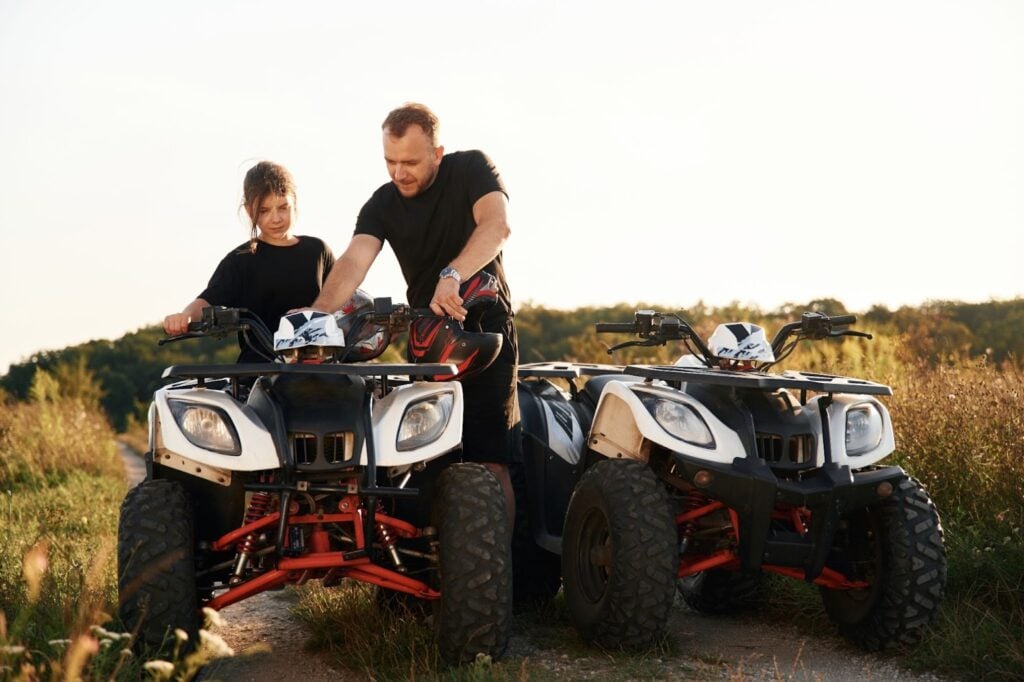
Many beginners struggle with jerky starts and sudden stops because they haven’t developed smooth throttle control. This skill requires patience and repeated practice in safe, open spaces.
Start by having your child practice applying gradual pressure to the throttle whilst stationary, feeling how the kids quad responds to different amounts of pressure. Once comfortable, progress to slow-speed riding in straight lines, focusing on maintaining steady speeds without constant acceleration and deceleration. This exercise builds the muscle memory needed for confident control.
Teach your child to anticipate rather than react. Looking ahead helps them prepare for obstacles or changes in terrain, allowing smoother throttle adjustments. Sudden movements often indicate a child reacting to immediate surroundings rather than planning their path. Encouraging forward vision dramatically improves riding smoothness.
Proper braking separates confident riders from those who panic in challenging situations. Children need to understand that effective stopping requires technique, not just pulling the brake lever as hard as possible.
Progressive braking provides the safest and most controlled stops. Teach your child to apply gradual pressure to the brake, increasing force smoothly rather than grabbing suddenly. This prevents the wheels from locking and maintains steering control throughout the stop. Practice emergency stops in controlled environments so children develop quick responses without panic.
Different surfaces require different braking approaches. On loose gravel or wet grass, earlier and gentler braking prevents skidding. Hard, dry surfaces allow for firmer braking with shorter stopping distances. Understanding these variations helps children adapt their technique to changing conditions, an essential skill as they progress to more varied terrain.
Turning represents one of the most challenging aspects for new kids quad bike riders. Many children either turn too sharply, risking loss of control, or take such wide turns that they run out of space.
Begin with wide, gentle turns at slow speeds. As your child becomes comfortable, gradually decrease the turning radius and increase speed appropriately. Teach them to look through the turn towards where they want to go, not at obstacles they want to avoid. This simple technique naturally guides the kids ATV along the intended path.
Counter-steering provides better control for sharper turns on teens ATV models. This involves briefly steering slightly opposite to the intended direction before committing to the turn. Whilst this seems counterintuitive, it helps shift weight and improves cornering ability at higher speeds.
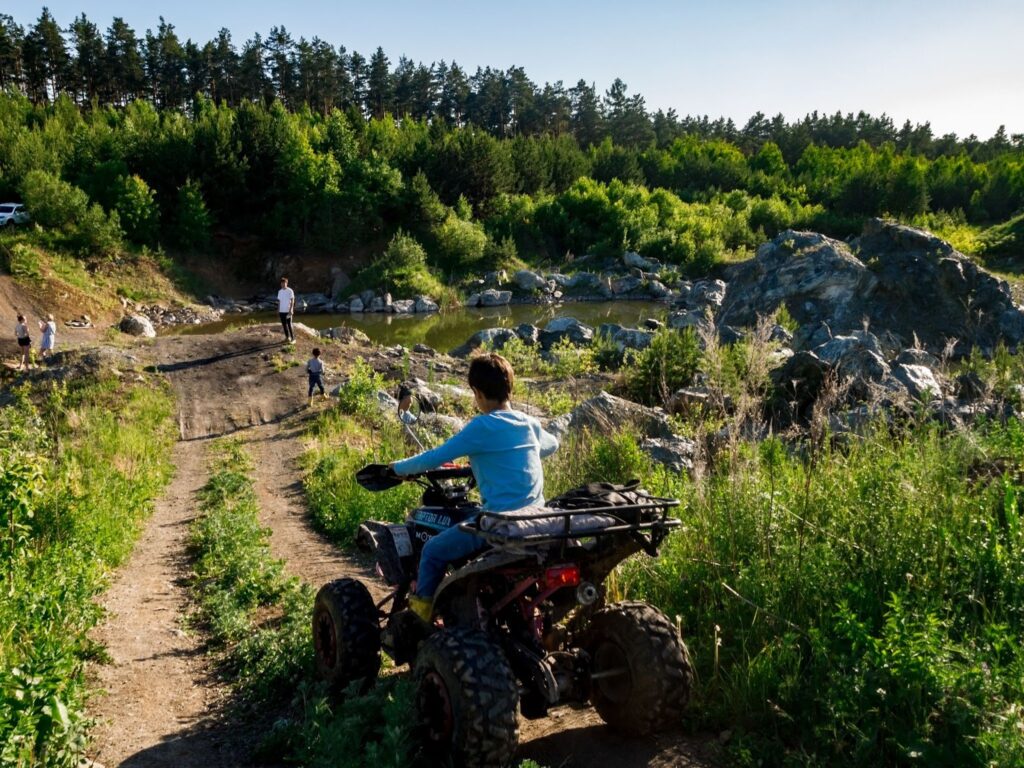
Hills present unique challenges that require specific techniques beyond flat-ground riding skills. Teaching proper hill navigation prevents the most common accidents involving kids quad bikes.
When ascending, children should lean forwards, keeping their weight over the front wheels to maintain traction and prevent backwards tipping. Steady throttle maintains momentum without wheel spin. If the hill proves too steep, teach your child to turn across the slope and descend safely rather than attempting to continue.
Descending requires the opposite approach. Leaning backwards keeps weight over the rear wheels whilst using gentle brake application controls speed. Teach children to descend straight down slopes rather than at angles, which can cause the kids quad to tip sideways.
Developing comprehensive riding skills for kids quad bikes requires structured progression rather than attempting everything simultaneously. Master each technique individually in controlled environments before combining them in real-world riding situations. This methodical approach builds genuine confidence and creates riders who can handle unexpected challenges safely.
Ready to put these techniques into practice? Explore our range of kids ATV models with adjustable speed settings perfect for learning riders, or contact our expert team for personalised advice on choosing the right kids quad for your child’s skill level. Browse our collection now.

Isleham Business Park, Unit 16, Hall Barn Road, Isleham, Ely, Cambridgeshire, CB7 5QZ
Sales & Advice: 01223 398 899
Copyright © 2025. Kids Quads. All rights reserved.